Many of the land disputes heard in the Manchester Parish Court has to do with the issue of encroachment. Land encroachment means that one person ‘advances’ or violates his boundary limits by building something on the neighbour’s land or allowing something to hang over the adjoining property boundary. An example of an encroachment is the construction of a dividing fence or wall that is not within the correct registered boundary of the property.
Before one becomes ‘entitled’, you must first apply to the court for a declaration that you are the common-law spouse. It is advised that you retain the services of an Attorney-at-Law for this procedure and to discuss your options based on the circumstances of your case.
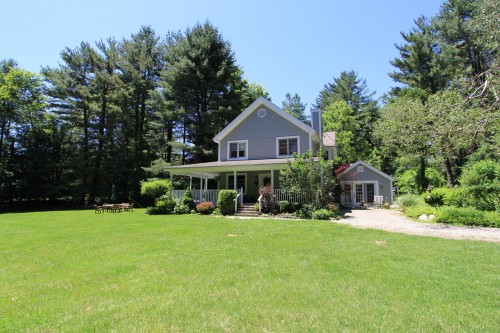
The Property (Rights of Spouses) Act defines the “family home” as the dwelling-house that is wholly owned by either or both of the spouses and used habitually or from time to time by the spouses as the only or principal family residence. It does not matter that one person purchased the property without any financial input from the other, once it was purchased as the family home, there is a presumption by law that you are entitled to 50 per cent of the current market value of the property. The Judge on your application, can make orders for it to be sold either at auction or privately, and that the net proceeds be divided between you in the percentages declared by the court.
A common-law relationship is possibly the most prevalent form of committed relationship in Jamaica. Many individuals opt out of walking down the aisle to marry their significant other because of fear of commitment yet their day-to-day activities is similar and in likeness to that of a married couple. The main fear indicated by many is the thought that if they live together and eventually separate, there will be no need for division of property. This is a common misconception as there are laws to protect parties who have been in a common law union.
Defining Spouse
Section 2 of The Property (Rights of Spouses) Act defines “spouse” as including a single man and a single woman who have been cohabiting together as if they were in law husband and wife for no less than five years. The term ‘cohabit’ is defined as meaning, ‘to live together in a conjugal relationship outside of marriage’.
It is common knowledge that death and taxes are the only two certainties in life. The saying “death and taxes go hand in hand”.is relevant in Jamaica because when a deceased person owns properties and other assets, the transfer of said assets to loved ones will require the payment of death duties to the Government.
There are two taxes payable: Stamp Duty which is payable before one can obtain a grant from the Supreme Court to call in the assets of the deceased and Transfer tax which is calculated at a rate of 1.5% of the value of any real estate owned by the deceased as at the date of death.
The Transfer Tax Act (1971) provides allowances and exceptions that can reduce the amount of transfer tax made payable on death; these include: funeral expenses, mortgage debts and whether the property was the principal place of residence.
Additionally, since April 2019, the exemption threshold was raised to $10 million. This means that transfer tax is only payable for estates that are valued over 10 million Jamaican dollars.
Death duties should be paid within one year after the deceased passing, if not done during that period, interest charges (6% per annum) will be added until that payment has been made. It is usually prudent to get guidance from an Attorney-at-Law who would advise you on how to handle the payment of death duties.
You can subscribe to our youtube channel Balcostics ED to get notification on other relevant legal and research topics.
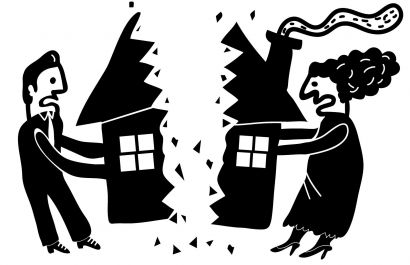
During a divorce or separation, the question of matrimonial property division often arises as couples tend to argue about who spent more money when building the house or paying the mortgage and would therefore be entitled to be a bigger stake of the house. Matrimonial Property is defined in the Property (Rights of Spouses) Act (PROSA) as “any real or personal property, any estate or interest in real or personal property… or any other right or interest whether in possession or not to which the spouses or either of them is entitled.” From this definition, it is clear that property is not defined to mean only the family home. The only thing the law has done in relation to the family home, and not in relation to other property, is the presumption that that there be the automatic application of equal division or the “50-50 rule” unless good grounds exist to warrant a deviation from it (section 6 of the Act).
Entrusting someone with Power of Attorney (POA) is an important step that should be carefully decided. If you are considering someone to be your Power of Attorney, then that individual has to be someone whose decision-making you trust completely. You (’Principal’) can give someone Power of Attorney to sign documents, attend court on your behalf or even make healthcare choices in the event that you are too ill to do so. This document can be very useful for persons abroad and unable to travel. Empowering a family member or friend in Jamaica with a power of attorney may come in convenient as that person can conduct business on your behalf.
You have been living on the land you purchased or received from your family member for many years and have been faithfully paying your property taxes but you do not have a registered title. This is the position that many land owners in rural Jamaica find themselves and are wondering what steps can be taken to obtain a title.
Before registering a land title in Jamaica, you first would need to contact an Attorney-at-Law who is verse in land dealings and you will need the assistance of a Commissioned Land Surveyor. Below are 6 key points to note when applying for a Registered Title:
“Mi ago talk di tings on mi Facebook/Instagram/Twitter” is a common saying by Jamaicans in recent years as persons use social media to vent their frustrations with individuals and companies, as well as to partake in and share the latest gossip. Both reliable and unreliable information is shared with equal exuberance.
But to what extent can one really ‘talk di tings dem’?
As an Attorney-at-Law practicing in the parish of Manchester for over two years, I have come across several civil matters involving farm lands. Whether the issue is with the landlord or the tenant, the first thing I ask the client is, “Do you have a lease agreement?”
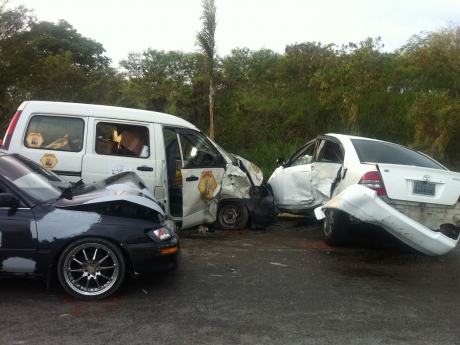
Many motorists are having the unfortunate experience of dealing with a collision, which can result in serious injury, as well as loss of life and property. Below are 6 key things to do at the scene of the accident and soon afterwards:
Stay at the Scene
Never leave the accident scene until it’s appropriate to do so. If you leave, particularly where someone has sustained injuries or was killed, you can face serious criminal penalties for being a hit-and-run driver. Make notes in respect of any tyre marks on the road, positions of the vehicles and take photos if a camera is available








 Balcostics LAW